


 AzuCATion
Oil Shock, FDI Push, AI Governance, E25 Trials & Critical Minerals
Today’s CNA is built around one central idea: India is trying to convert crisis pressure into capability building. Oil and currency shocks are testing macro stability, while FDI, shipbuilding, critical minerals, AI rules and clean mobility show how policy is moving from reaction to resilience.
The strongest way to read today’s news is through the lens of resilience under imported stress. India is not facing one isolated shock; it is facing a linked chain of energy volatility, currency pressure, inflation risk, consumer price adjustments, trade-route disruption and technology disruption.
For GD-PI, do not memorise these as separate headlines. Connect them into one larger argument: India’s next growth phase will depend on how quickly it can reduce external dependence while improving domestic capability in shipping, minerals, manufacturing, healthcare, digital governance and workforce transition.
Quick Navigation
Oil shock returns: Brent spike, rupee pressure and market caution
West Asia is no longer only a geopolitics story. It has become a macroeconomic test for India’s growth, inflation, currency and investor sentiment.
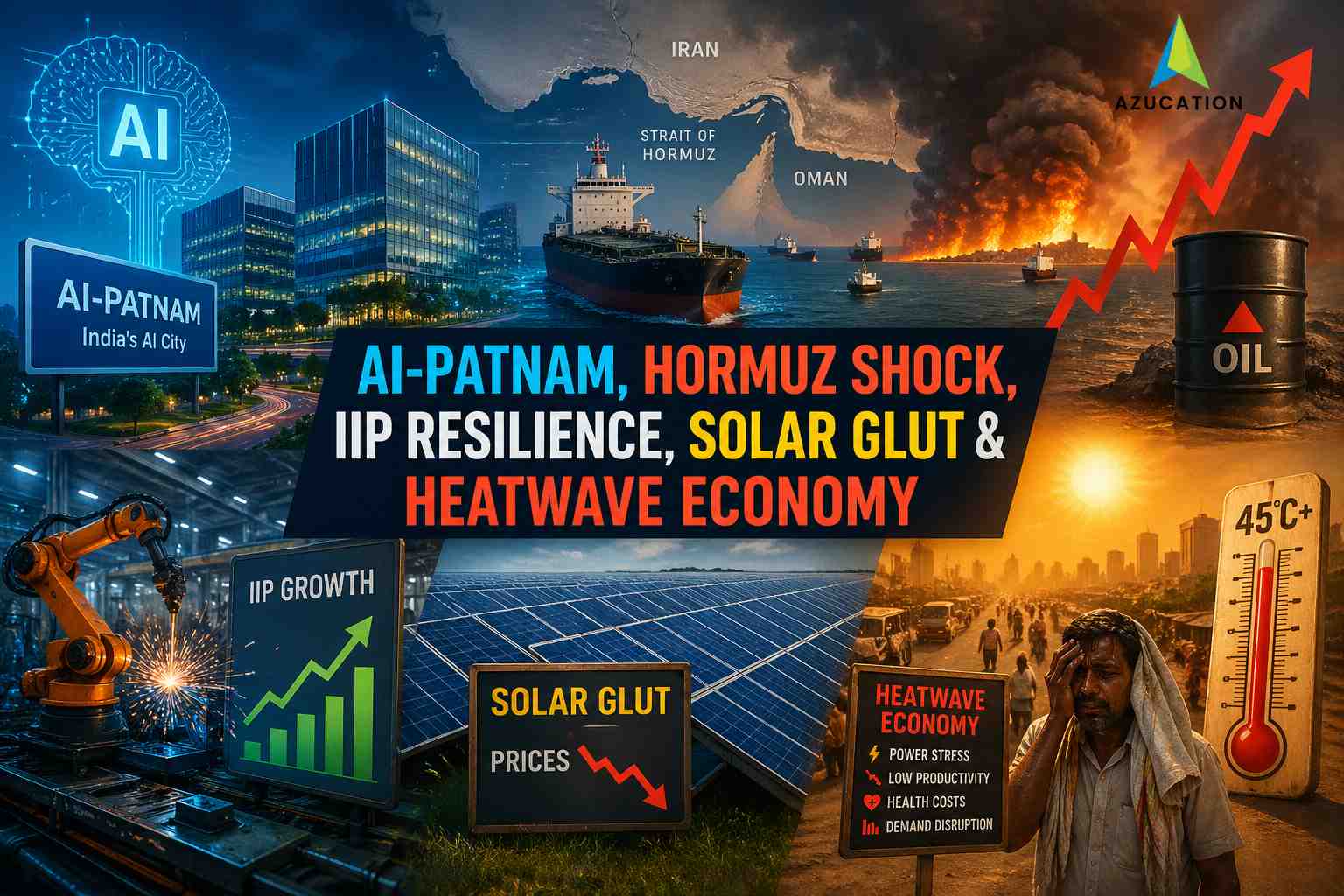
Domestic markets fell as Brent crude surged intraday above $126 per barrel before cooling below $114. The Sensex ended around 76,914, down about 583 points, while the Nifty closed near 23,998, down about 180 points. The rupee also touched a fresh low near ₹95.34 per dollar before recovering with intervention support.
The deeper concern is the Strait of Hormuz disruption. India imports most of its crude, and any prolonged rise in oil prices affects the economy through fuel costs, freight, fertiliser, plastics, aviation fuel, household inflation and the current account deficit. Economists warned that if the Indian crude basket averages around $120 per barrel in FY27, growth could slow and inflation could move closer to uncomfortable levels.
Oil shock → higher import bill → weaker rupee → higher inflation risk → pressure on rates, fiscal deficit and corporate margins.
For interviews, the right framing is not “oil prices rose”. The right framing is that energy dependence can quickly become a growth, inflation, currency and policy problem at the same time.
Interview line: India’s oil shock shows that macroeconomic stability is not only a domestic policy outcome; it also depends on shipping routes, supplier diversification and geopolitical risk management.
FDI may cross $90 billion: India’s investment story stays alive
Even as oil and currency risks rise, India’s foreign investment pipeline shows confidence in reforms, manufacturing and supply-chain relocation.
India’s FDI inflows are expected to cross $90 billion in FY26. Gross inflows had already crossed $88 billion during April-February, higher than the previous year’s total. The policy signal is important: India is being seen not just as a consumption market, but also as a manufacturing and supply-chain diversification destination.
Invest India facilitated the grounding of 60 projects worth over $6.1 billion across 14 states in FY26, with potential job creation of more than 31,000. Around 42% of grounded investment value came from Europe, while newer interest from Brazil, New Zealand and Canada suggests a widening investor base.
FDI is more valuable when it brings technology, jobs, export capability, domestic suppliers and long-term manufacturing depth—not just capital inflow.
The MBA angle is simple: foreign investment flows where the risk-return equation is favourable. India’s task is to reduce friction in land, logistics, taxation, regulation, skilling and dispute resolution so that investment announcements convert into factories, services and jobs.
Critical minerals and shipbuilding: India builds strategic buffers
The same West Asia crisis that is hurting oil imports is also pushing India to think harder about vessels, minerals and domestic industrial capability.
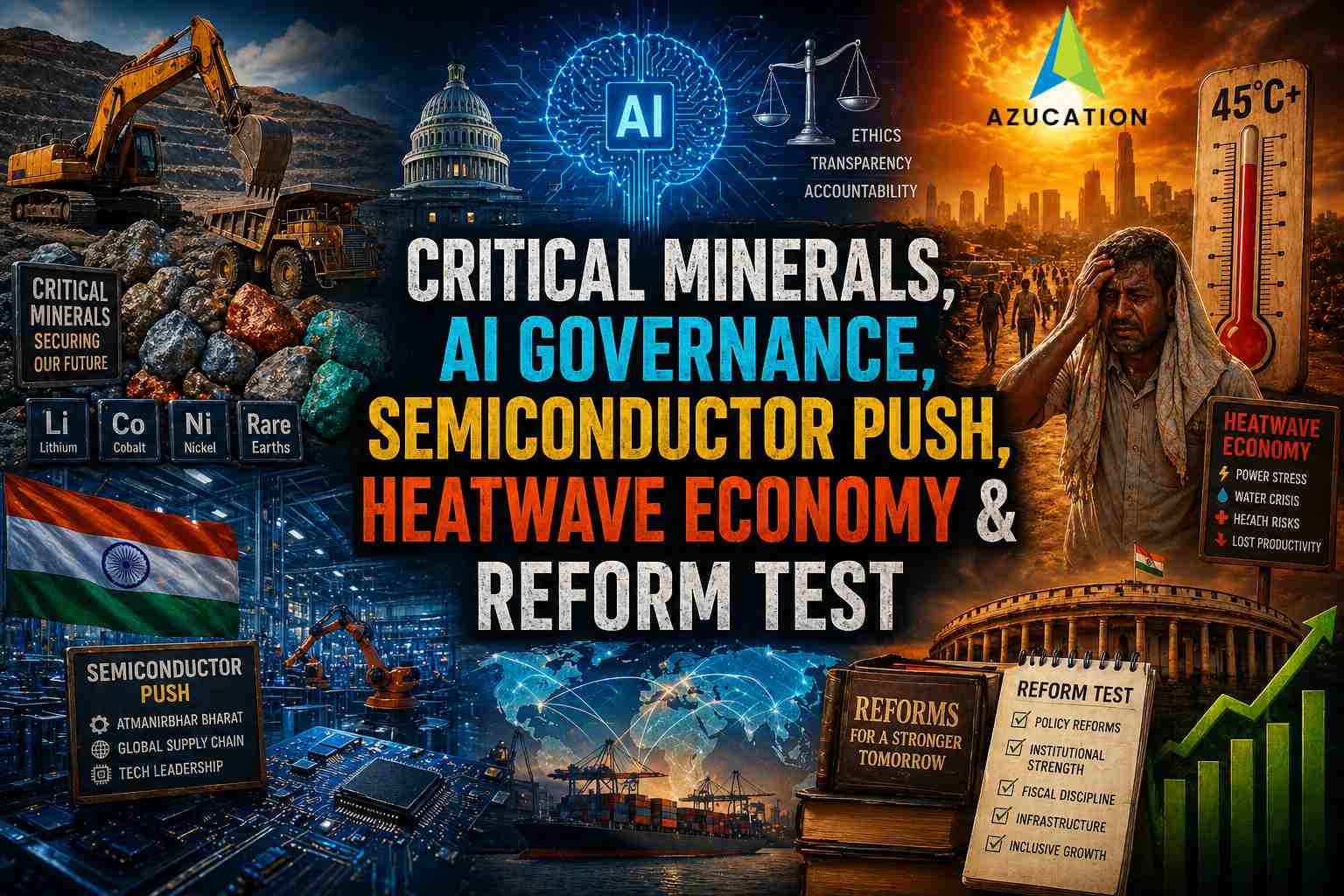
The government approved 58 companies under a critical mineral recycling incentive scheme. Together, these firms have pledged around ₹5,000 crore of investment and about 850 KTPA of recycling capacity across lithium-ion batteries, e-waste and industrial scrap. This is crucial for electric vehicles, electronics, renewable energy and advanced manufacturing.
At the same time, India is planning a ₹51,000 crore procurement of 62 vessels, including container ships, LPG carriers, crude carriers, product tankers and green tugs. The larger objective is to reduce dependence on foreign carriers and strengthen trade continuity when global shipping lanes are disrupted.
In a crisis-prone world, minerals and ships are not ordinary sectors. They are part of economic security, supply-chain continuity and industrial sovereignty.
Tata Power’s renewable energy arm also approved a plan to invest around ₹6,500 crore in a 10 GW photovoltaic ingot and wafer manufacturing facility. This fits the same theme: India is trying to move upstream in clean-energy supply chains instead of remaining dependent on imported components.
Interview line: Critical mineral recycling, domestic shipbuilding and solar wafer manufacturing show that supply-chain resilience is becoming a core pillar of industrial policy.
E25 trials, PNG expansion and road safety tech: policy enters the execution zone
Energy transition is not only about setting targets. It requires testing vehicles, redesigning rules, connecting households and modernising transport systems.
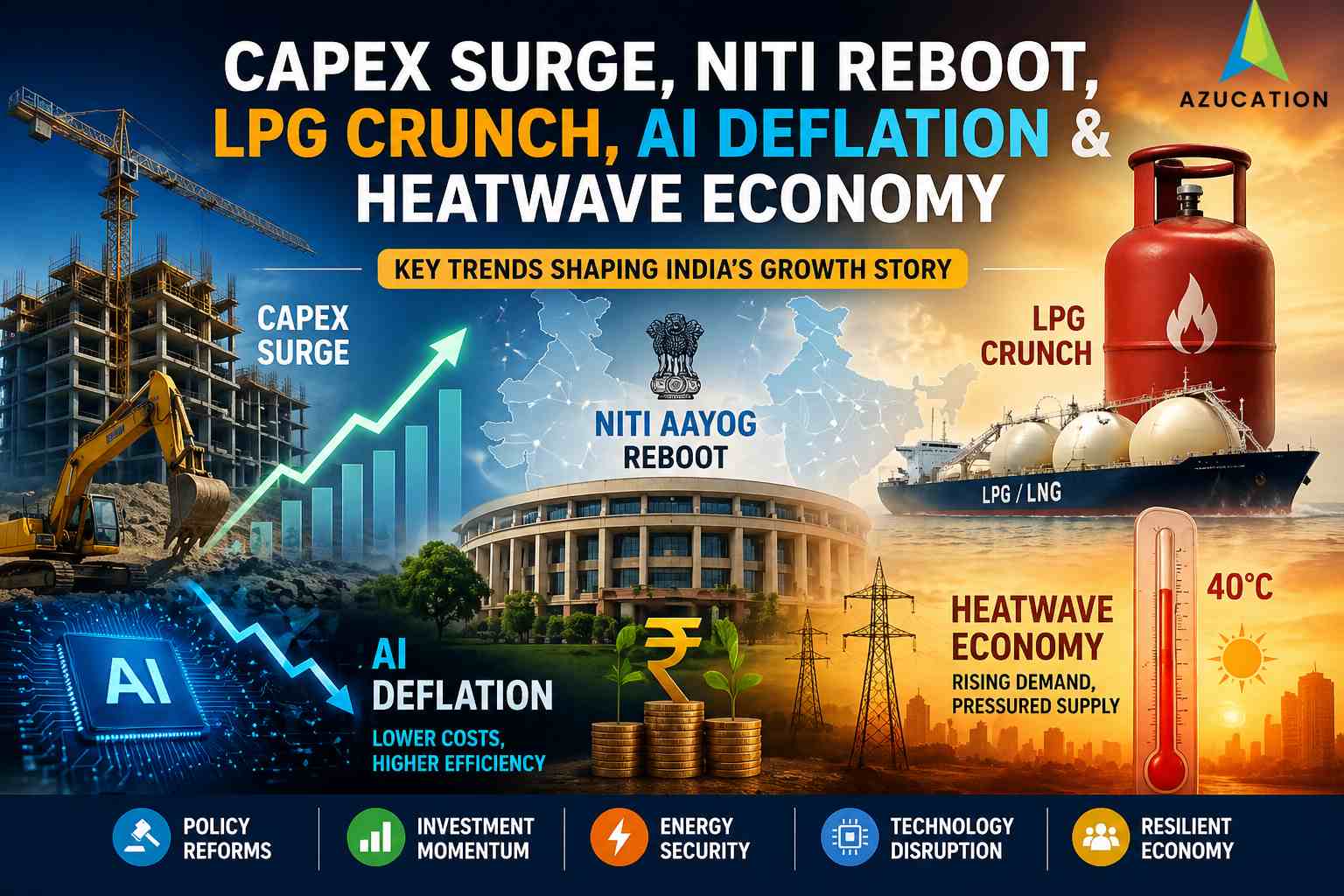
Automakers are pushing for structured trials before India moves from E20 petrol to E25. The concern is that around 240 million two-wheelers and 40 million cars were originally designed for lower ethanol blends. Different vehicle types—older carburettor two-wheelers, newer fuel-injection models and electronic-control vehicles—may respond differently to higher ethanol content.
The industry is therefore suggesting a phased transition, possible 2026 testing, and gradual movement towards E25 between 2027 and 2028. This matters because energy security must be balanced with consumer protection, warranty clarity, vehicle performance and regulatory readiness.
A target without testing can create consumer confusion. A phased transition converts policy ambition into operational confidence.
A task force has also proposed faster PNG adoption, including 6 million new PNG connections by June 2026 and reforms around smart prepaid meters, LPG-to-PNG transition and building mandates. Separately, TRAI has begun consultations on vehicle-to-everything connectivity using the 5.9 GHz band to reduce road accidents and improve transport safety.
AI governance and jobs: Musk-Altman case, Big Tech capex and IT restructuring
AI is no longer only a technology story. It is now about governance, capital, competition, employment and who controls foundational platforms.
The Musk vs Altman case questions whether OpenAI has moved too far from its original non-profit mission towards a commercial AI model. The debate is important for MBA aspirants because it asks a larger governance question: when AI systems become socially powerful and capital-intensive, who should decide their access, ownership, safety and deployment?
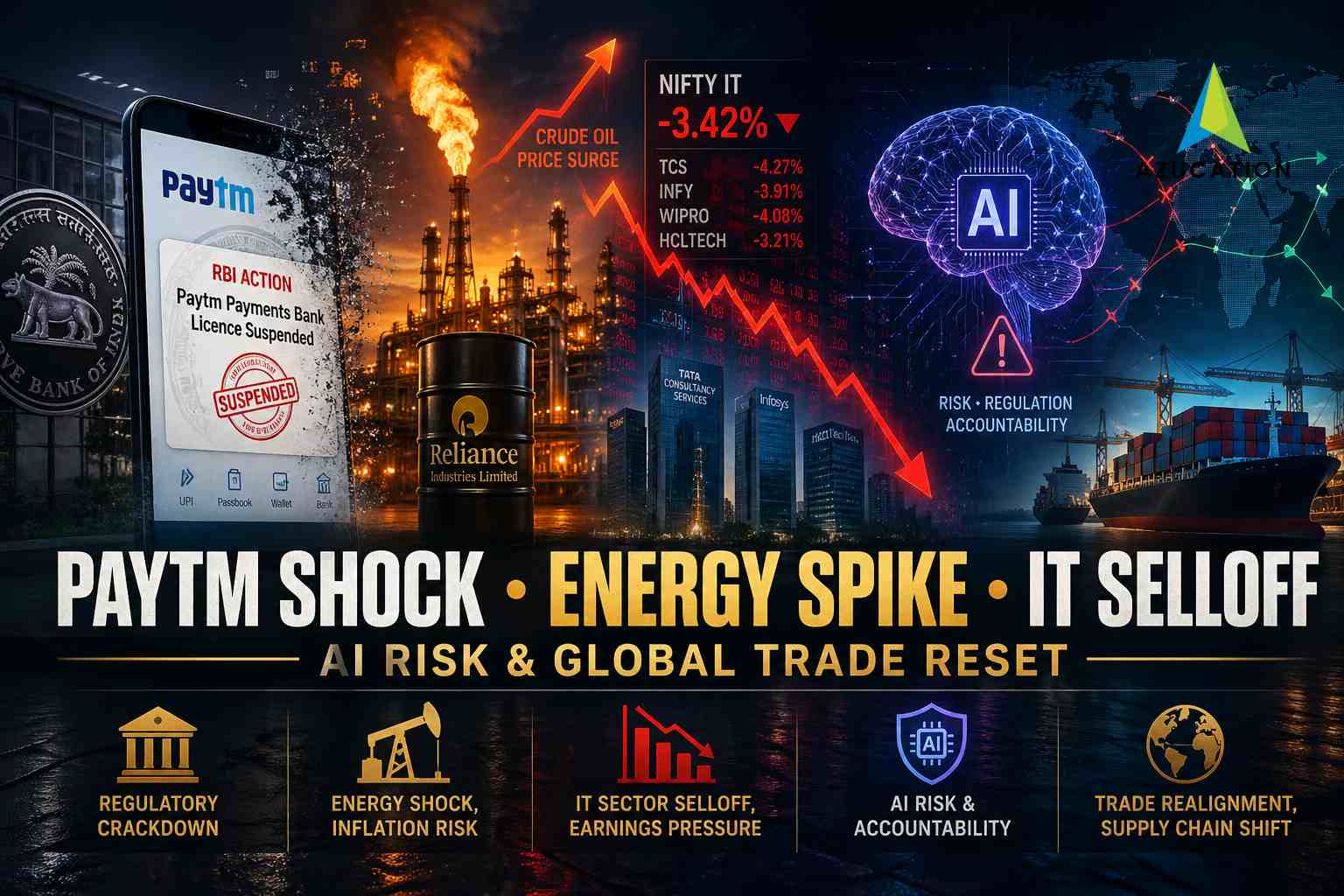
Big Tech earnings also show that AI is becoming a capital race. Alphabet, Meta, Amazon and Microsoft are spending heavily on AI infrastructure. Google was able to show stronger cloud momentum linked to AI demand, while investors were more cautious about Meta’s rising capex and slower visible payoff.
AI creates two simultaneous pressures: firms need huge capital to compete, but society expects transparency, safety and accountability from the same firms.
Cognizant’s possible 7,000-15,000 job cuts under Project Leap show how AI is reshaping cost structures in IT services. The company wants its operating model to become more AI-ready amid weak demand. For GD-PI, the balanced answer is that AI can create new roles but will also compress traditional work, especially repetitive coding, testing, support and back-office functions.
Consumer pricing, EV affordability and healthcare transparency
Households are facing the second-round effects of global shocks: FMCG price hikes, EV cost changes, medical cost transparency and nutrition gaps.
HUL reported strong Q4 numbers, with volume growth at a 15-quarter high, but also flagged commodity and currency volatility. The company has begun calibrated price hikes in the 2-5% range. This is a classic consumer-business case: when input costs rise, firms must protect margins without damaging volumes.
EV affordability is also under pressure as some major states end EV purchase subsidies and others introduce road taxes. For buyers, EVs are still often costlier upfront than internal combustion vehicles, so policy support, fuel prices and charging convenience influence adoption.
When costs rise, the real test is elasticity. Essential FMCG goods may handle price hikes better than discretionary products, but repeated inflation still affects sentiment.
Healthcare transparency has also entered the policy agenda. The Centre plans to mandate clinics and doctors to display consultation fees in English and regional languages, along with qualifications and registration details. The aim is to reduce information asymmetry and help patients make informed decisions.
Another important social angle is nutrition. A study based on consumption data and dietary norms found that India is not producing or consuming enough pulses to meet nutritional recommendations, while cereals remain abundant. This reveals that food security is not only about calories; it is also about protein, diversity and affordability.
GD-PI Interview Angles
Use these points to convert today’s news into interview-ready arguments.
1. Is India too dependent on imported energy?
Yes, but the correct answer must include supplier diversification, strategic reserves, domestic alternatives, ethanol blending, renewable energy and shipping capacity.
2. Can FDI alone make India a manufacturing hub?
No. FDI helps, but success depends on land, logistics, skills, domestic suppliers, contract enforcement and ease of scaling.
3. Is AI a job destroyer or productivity engine?
It is both. Routine work may shrink, but new roles in AI operations, data, compliance, domain consulting and product management can expand.
4. Should India move quickly to E25?
Only after testing and consumer safeguards. Energy security is important, but vehicle compatibility, warranty norms and public communication matter.
5. Why are critical minerals strategic?
They are essential for EVs, batteries, electronics, solar power and defence technologies. Recycling reduces import dependence and waste.
6. Why is healthcare fee transparency important?
It reduces information asymmetry, helps patients compare services and can improve trust in private healthcare delivery.
WAT Practice Themes
Pick any one and write a 250-word structured answer.
- Energy security is now central to India’s growth strategy.
- AI companies need both capital freedom and stronger governance.
- FDI is useful only when it creates domestic capability.
- India’s EV transition must balance ambition with affordability.
- Critical mineral recycling can become India’s next strategic industry.
- Healthcare transparency is essential for patient trust.
- Food security must move from cereal sufficiency to nutritional adequacy.
- Geopolitical shocks are forcing countries to rethink supply chains.
RC Practice Quiz: Crisis as Capability Builder
Passage
India’s current economic challenge is not merely to survive a temporary oil shock. The larger challenge is to build systems that reduce vulnerability to repeated external shocks. When crude prices rise, the impact moves through the economy: the import bill widens, the rupee weakens, inflation risk rises, and firms face higher input costs. But the response cannot be limited to short-term price management.
Policy is therefore shifting towards capability building. India is trying to attract foreign investment, expand domestic shipping, recycle critical minerals, manufacture upstream solar components, test higher ethanol blends and improve gas distribution. These steps may not eliminate global risk, but they can reduce the speed and intensity with which external shocks affect households and firms.
The same logic applies to AI and healthcare. AI needs governance because capital-intensive technology platforms can affect jobs, competition and public trust. Healthcare needs fee transparency because patients often face information gaps. In both cases, the central theme is the same: modern growth requires not only expansion, but also better rules, better data and better institutional design.
1. What is the central idea of the passage?
2. According to the passage, why is crude oil volatility risky for India?
3. Which pair best represents the passage’s idea of institutional design?
Your Result
Score will appear here.
Join AzuCATion for Daily CNA + GD-PI Preparation
Use this daily current news analysis to build interview-ready thinking, WAT points and business awareness for MBA preparation.
Editorial note: This CNA page is prepared for educational use by AzuCATion. It summarises and analyses reported business and policy developments for MBA aspirants.
Suggested slug: /cna-01-may-2026/