


 AzuCATion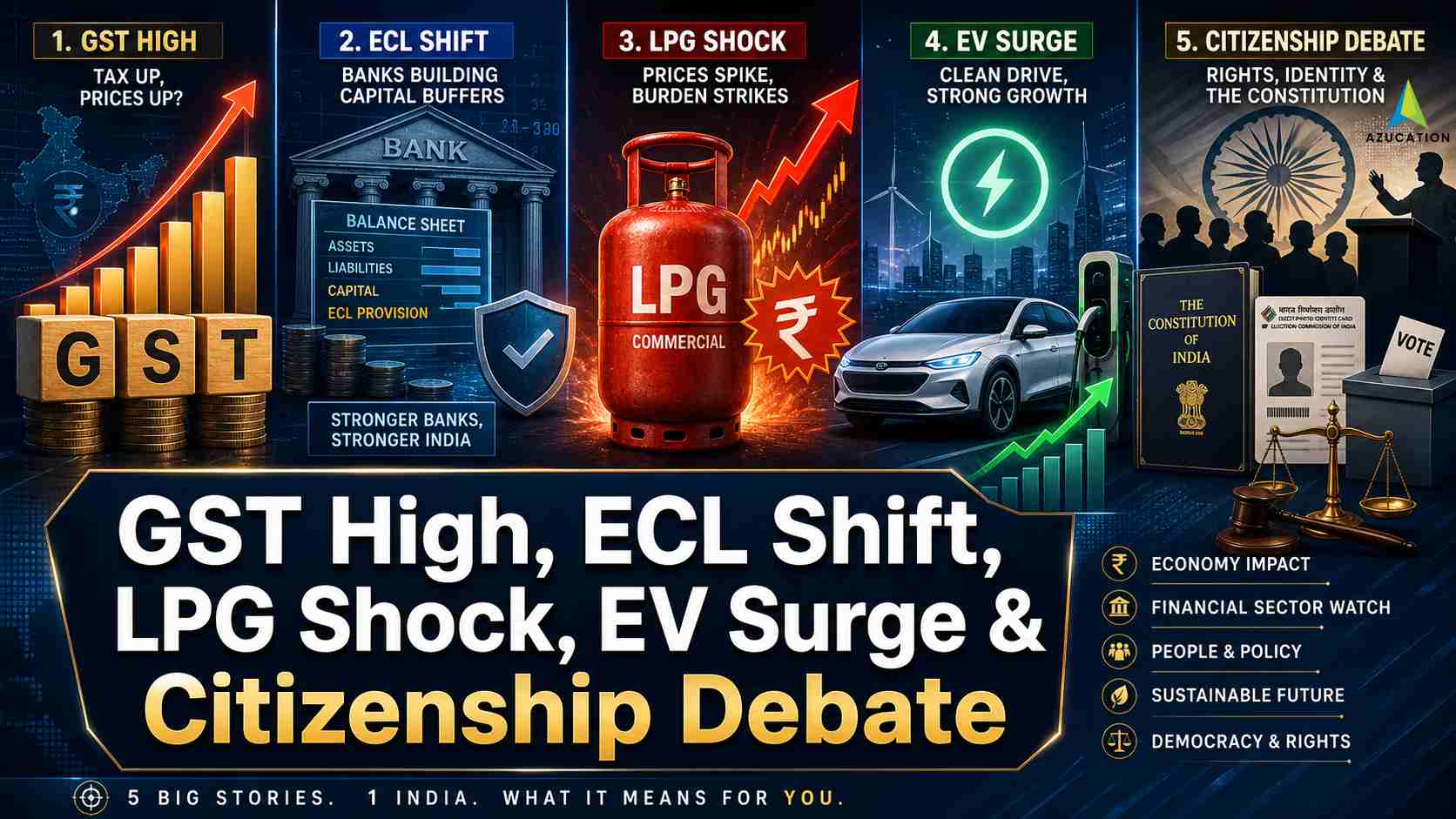
GST High, ECL Shift, LPG Shock, EV Surge & Citizenship Debate
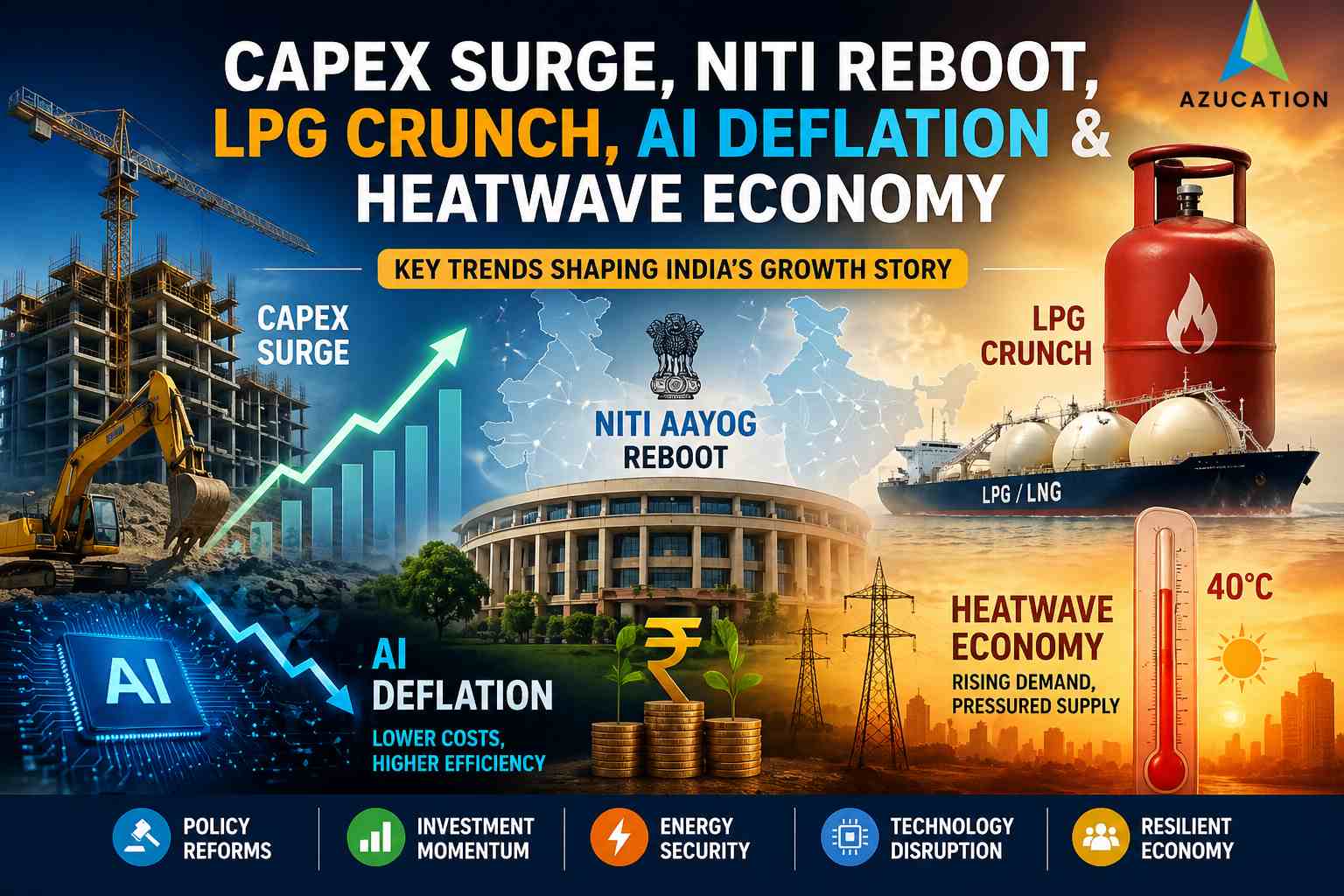
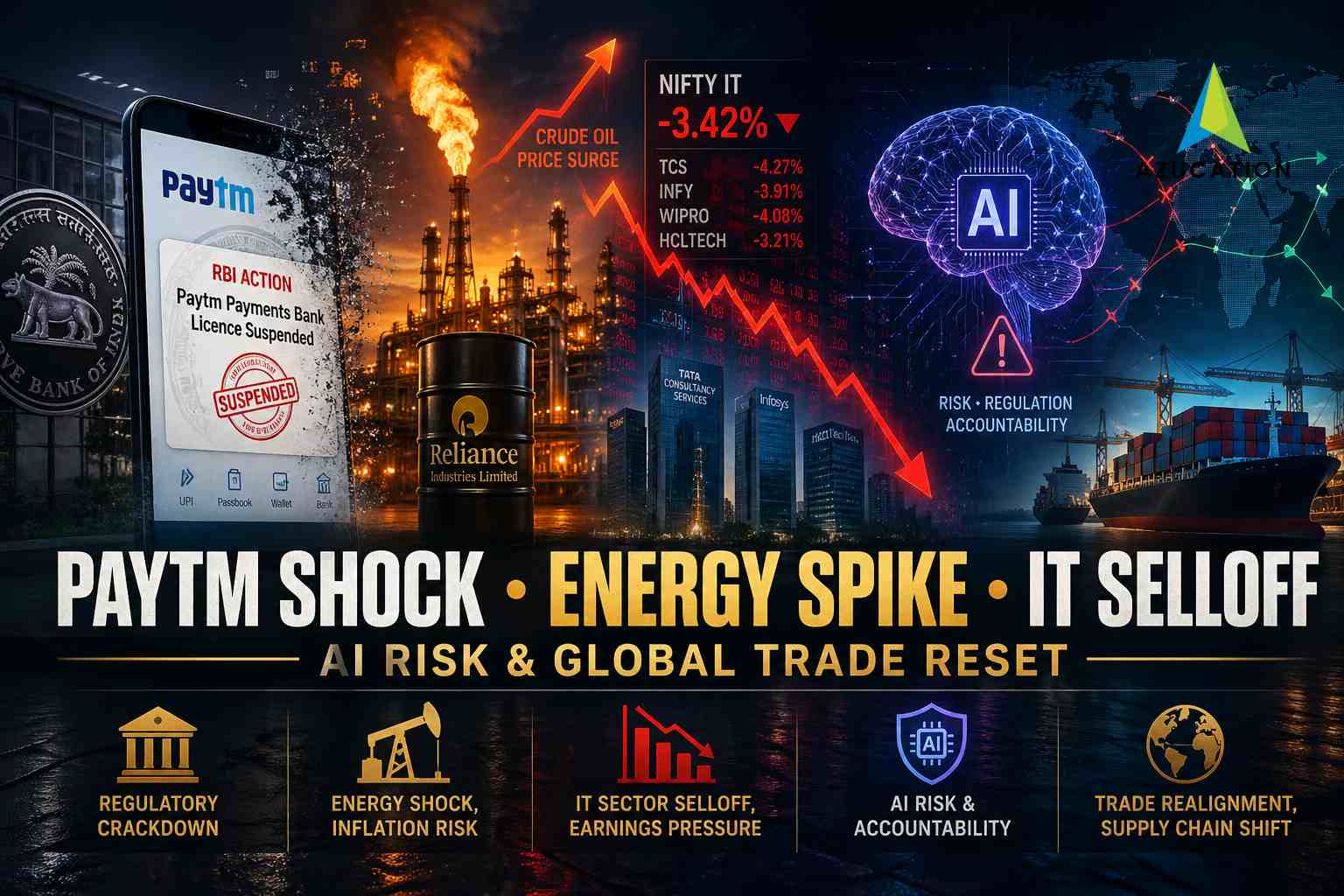
Today’s CNA is built around one central idea: India is growing through a stress test. Tax collections and vehicle sales show demand resilience, but oil-linked costs, banking provisioning, export pressure, citizenship debates and AI-led workplace changes show that growth now needs stronger institutions.
The strongest way to read today’s news is through the lens of resilience with rising friction. India is not facing a single crisis; it is managing a combination of energy volatility, fiscal pressure, bank-capital preparation, domestic demand shifts, export concentration risk and social questions around citizenship and trust.
For GD-PI, do not treat these as separate headlines. Connect them into one larger argument: India’s next stage of growth will depend not only on demand and investment, but also on the quality of institutions that manage shocks—tax systems, banks, courts, regulators, cities, platforms and labour markets.
Quick Navigation
GST collections hit a record: demand strength, compliance gains and import-led support
The April GST number is a positive start to FY27, but MBA aspirants must read it carefully—not just as revenue growth, but as a signal about consumption, imports and tax administration.
April GST collections touched record highs. Gross GST collections rose to around ₹2.43 trillion, while net collections after refunds were around ₹2.11 trillion. Gross collections grew 8.7% year-on-year and net collections rose 7.3%.
The important twist is that the rise was driven strongly by import-linked collections. Net GST revenue from imports surged sharply, while net domestic revenue growth remained subdued because refunds were higher. This means the headline is strong, but the composition needs analysis.
Record GST collections show resilience, better compliance and year-end business activity; however, an import-led surge also reflects external trade links and can be vulnerable if energy prices disturb consumption.
Fiscal policy is also under pressure. The government wants to preserve the FY27 capex target of around ₹12 trillion even as crude oil shock and excise duty cuts can create fiscal stress. This is the classic public-finance trade-off: protect growth spending while absorbing external volatility.
Interview line: A strong GST number is good news, but the smarter answer is to ask whether growth is domestic-demand-led, import-linked, compliance-led or just a year-end spike.
Public-sector banks prepare for ECL: from reactive provisioning to forward-looking risk
Banking news often looks technical, but this story is important because ECL can change how banks recognise loan risk.
Several public-sector banks are preparing to raise capital before the Expected Credit Loss framework for loan-loss provisioning takes effect in April 2027. Bank of India approved plans to raise ₹7,500 crore through bonds, while Indian Bank has board approval for a ₹5,000 crore qualified institutional placement if needed.
The ECL framework matters because it requires banks to recognise probable credit losses earlier instead of waiting for actual defaults. That can make balance sheets more transparent, but it can also increase provisioning requirements and reduce capital comfort during transition.
Good risk management is not only about reacting after loans fail. It is about estimating future stress early and keeping enough capital buffers before the shock becomes visible.
The RBI also reminded market makers that privileges come with responsibilities. In volatile markets, banks and dealers are not merely profit-seeking participants; they are also gatekeepers of fair access, hedging and market integrity.
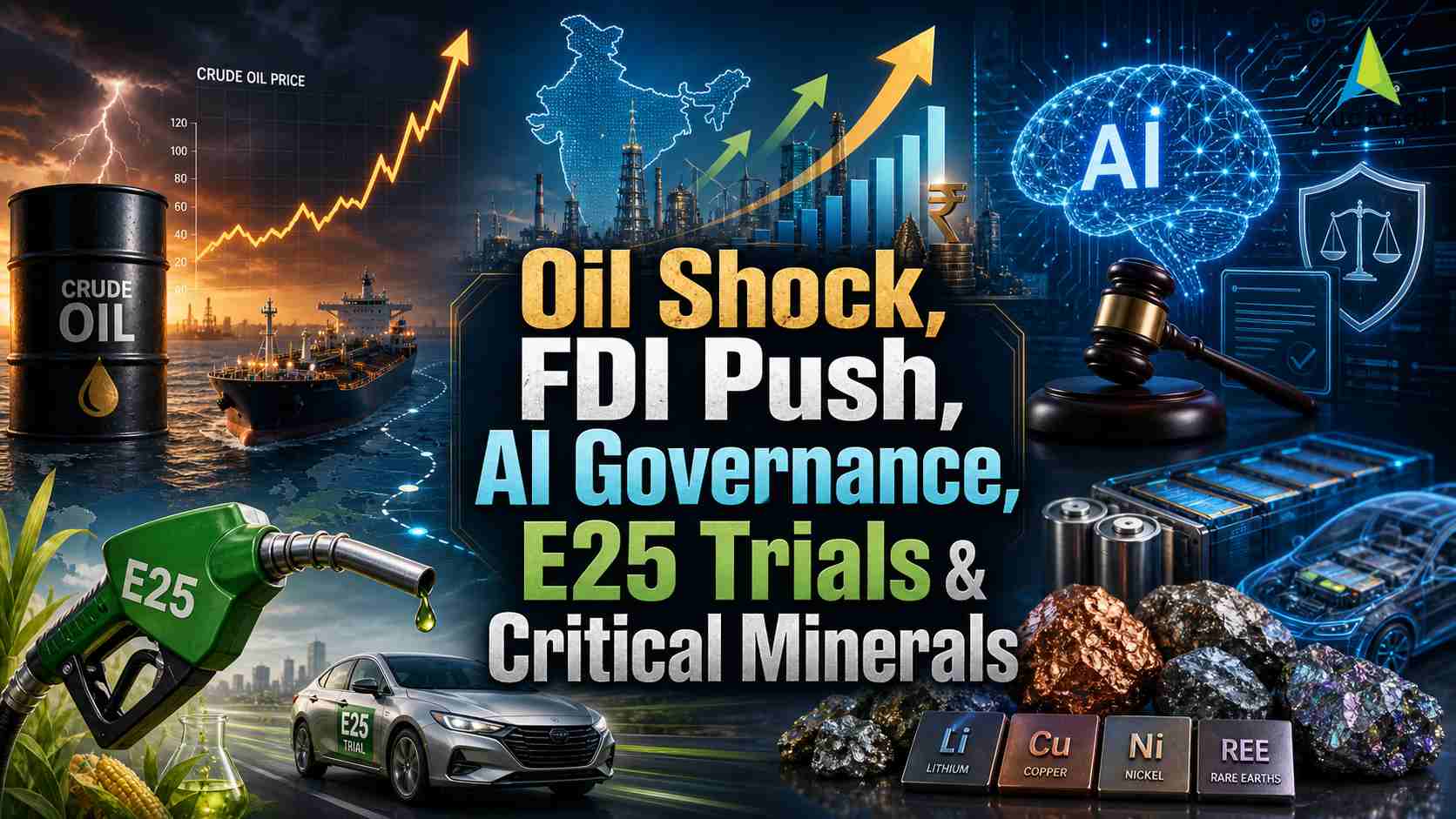
Energy shock widens: commercial LPG price jump and fuel exports slump
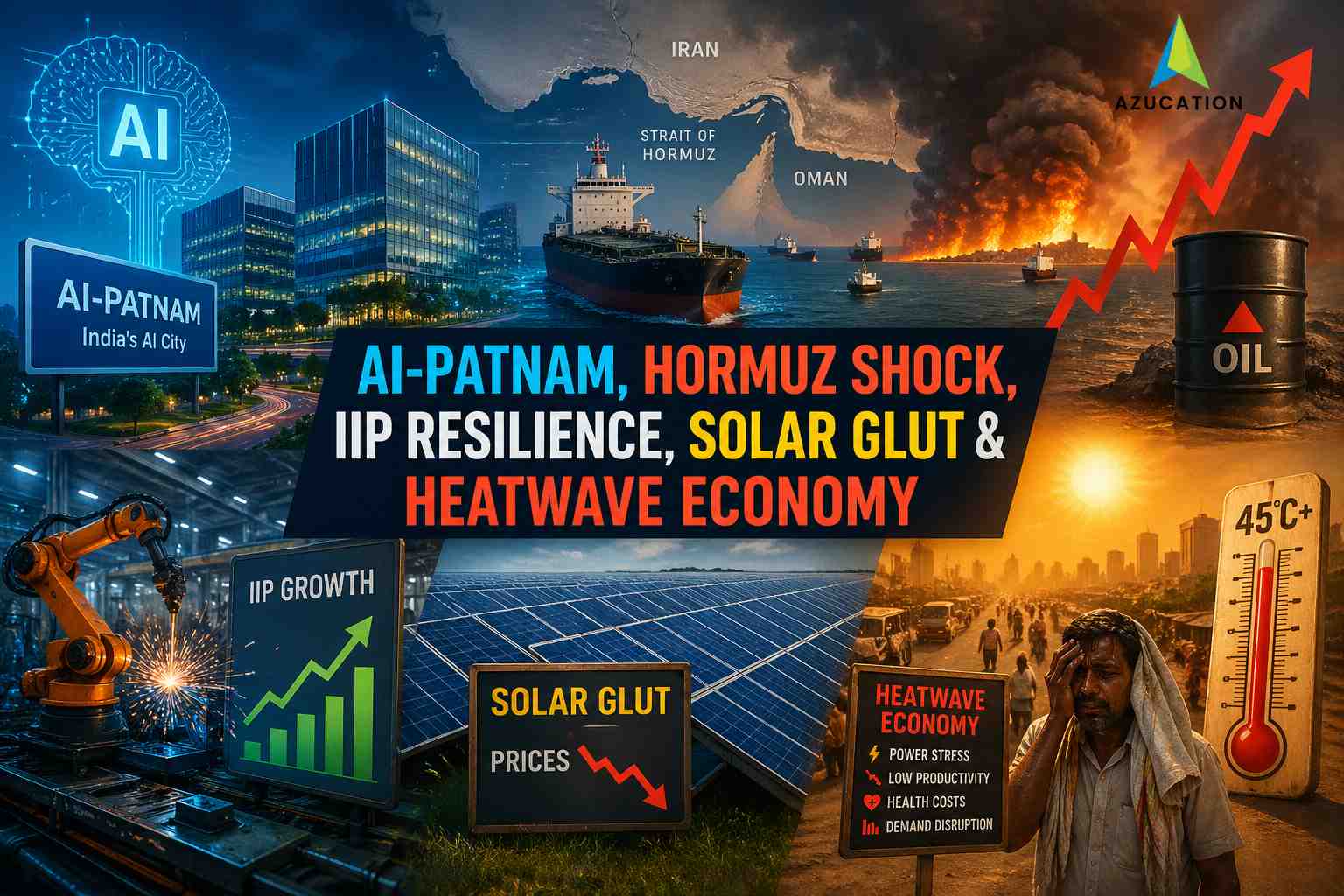
West Asia tensions and high crude prices are now entering India’s economy through logistics, aviation, refinery exports, currency pressure and corporate costs.
Oil-marketing companies raised prices of several fuel products linked to commercial and industrial use. The price of a 19-kg commercial LPG cylinder in Delhi increased by ₹993 to ₹3,071.50, while bulk diesel and ATF for international operations also became costlier. Domestic LPG and retail petrol-diesel prices remained unchanged.
At the same time, India’s fuel exports fell to their lowest level since October 2022. Exports of petroleum products such as diesel and petrol averaged around 947,000 barrels per day in April, hurting dollar inflows at a time when the rupee and crude import bill are already under pressure.
Crude shock → refinery and export pressure → higher commercial fuel costs → logistics and aviation cost impact → inflation and margin pressure.
The MBA angle is cost pass-through. Firms that depend on commercial LPG, bulk diesel, aviation fuel and logistics may face higher costs. Whether they can pass these costs to consumers depends on pricing power, demand elasticity and competition.
Interview line: India’s energy challenge is not only about petrol prices. The real impact often travels through commercial LPG, aviation, freight, exports and corporate margins.
Autos stay strong: PV sales rise, EV adoption accelerates and Apple deepens India story
Consumer demand is not collapsing despite uncertainty. Cars, EVs and premium devices show how aspiration and affordability are moving together.
Domestic passenger vehicle wholesales rose around 27% year-on-year in April to about 450,000 units. Maruti Suzuki reported its highest-ever monthly domestic sales, while Tata Motors, Hyundai, Toyota and Kia also showed growth.
Electric passenger vehicle sales also remained strong. January-April EV volumes rose about 69.5% year-on-year to 79,063 units, with Tata Motors leading and Mahindra growing rapidly. In electric two-wheelers, Ola Electric reported month-on-month growth in April even as the wider two-wheeler EV market softened.
India’s auto market is showing two stories at once: traditional PV demand remains strong, while EVs are slowly becoming practical due to range, cost and operating savings.
Apple CEO Tim Cook said he was highly excited about India, with double-digit growth in iPhone and iPad sales. India is no longer only a sales market for Apple; it is also becoming a manufacturing and export hub. The broader case study is how India can move from consumption story to production story.
Citizen kaun? Citizenship, AI dependence and the value of public spaces
Today’s society stories are not soft stories. They deal with trust, belonging, democratic participation, mental bandwidth and urban citizenship.
The citizenship debate returned through voter-list exclusions, birthright citizenship arguments and questions around who truly “belongs”. The key learning is that citizenship is not only a legal status. It is also about recognition, documentation, rights, obligations and public trust.
Another important idea came from the discussion around AI and frictionless life. As people rely more on AI assistants, delivery apps, remote work and automated services, there is a risk of reduced patience, social contact, memory and ambiguity tolerance. For MBA students, this becomes a workplace and leadership issue: efficiency should not eliminate human judgement.
Good institutions reduce unnecessary friction, but a completely frictionless life can weaken skills like negotiation, empathy, patience and problem-solving.
Urban public spaces also matter. Community-driven initiatives such as park walks, singing sessions and citizen action show that public spaces become stronger when citizens emotionally connect with them. For cities, participation is not decoration; it is governance capacity.
Interview line: A developed society is not built only by GDP. It also needs credible citizenship rules, healthy public spaces and technology use that strengthens rather than replaces human capability.
Pharma exports, critical minerals and corporate governance: resilience needs diversification
Whether it is medicines, minerals or large business groups, the common theme is dependence risk and the need for clearer rules.
India’s pharmaceutical exports touched a record $31.12 billion in FY26, but growth slowed to 2.13% because shipments to the US declined nearly 10%. The US still accounts for a large share of India’s pharma export market, so the slowdown shows the risk of overdependence on one mature market.
Vedanta is evaluating the addition of up to three critical minerals over five years and is also looking at rare-earth magnet manufacturing. This fits the broader industrial-policy theme: India wants deeper control over minerals and components that matter for EVs, electronics, defence and clean energy.
Exports, minerals and corporate capital allocation all carry concentration risk. Resilient growth requires market diversification, domestic capability and transparent governance.
Corporate governance also stayed in focus, with debate around whether Tata Sons should be listed under RBI’s scale-based framework for upper-layer NBFCs. For MBA interviews, this is a strong example of how transparency rules become more important when a holding company has systemic size and affects public shareholders across the group ecosystem.
GD-PI Interview Angles
Use these points to convert today’s news into interview-ready arguments.
1. Are record GST collections proof of strong demand?
Partly yes, but a mature answer should also discuss compliance, year-end filings, import-linked collections, refunds and the risk from energy inflation.
2. Why is ECL important for banking?
It pushes banks to recognise future expected losses earlier, improving transparency but requiring stronger capital buffers.
3. Should fuel prices be fully market-linked?
Market pricing improves fiscal discipline, but governments often protect households from sudden shocks. The answer lies in targeted support rather than blanket distortion.
4. Is India’s EV transition demand-led or policy-led?
It is both. Subsidies and policy support help, but practical factors like range, operating cost, charging and resale confidence are becoming more important.
5. Why does citizenship debate matter for economy?
Stable citizenship rules build trust in institutions. Uncertainty around documentation and exclusion can weaken social cohesion and democratic confidence.
6. How should workers stay relevant in AI era?
Workers need AI fluency plus soft skills: communication, judgement, creativity, problem-solving and the ability to work with ambiguity.
WAT Practice Themes
Pick any one and write a 250-word structured answer.
- Record tax collections are meaningful only when they support productive public spending.
- Forward-looking banking regulation is essential for financial stability.
- Energy shocks test both fiscal discipline and consumer protection.
- India’s EV transition must move from subsidy dependence to practical adoption.
- Citizenship is not only a legal issue; it is a question of trust and belonging.
- AI can improve productivity, but excessive dependence may weaken human capability.
- Public spaces are critical to urban citizenship.
- Export diversification is the foundation of economic resilience.
RC Practice: Growth Under Friction
Passage
In public discussion, economic strength is often measured by visible expansion: tax collections, vehicle sales, foreign investment, digital payments, export numbers and the confidence of large corporations. By that measure, India appears to be moving with considerable momentum. April’s GST collections reached record levels, domestic passenger vehicle wholesales rose sharply, electric vehicle sales retained much of their recent traction, and global technology firms continued to describe India as a market and manufacturing base of exceptional promise. These signals are not trivial. They indicate consumption, compliance, aspiration and the possibility of scale.
Yet the same data also warns against excessive celebration. Record tax collections may partly reflect year-end filing effects and import-linked collections rather than broad-based domestic buoyancy. Strong car sales may reflect policy tailwinds, inventory cycles and income-tax relief as much as permanent demand. EV adoption is rising, but it still depends on affordability, charging confidence, technology costs and policy design. Even Apple’s enthusiasm for India carries a dual meaning: India is both a growing consumer market and a location whose manufacturing competitiveness must be continuously earned through supply-chain depth, skills and predictability.
The sharper message comes from the areas of friction. The West Asia conflict has made crude oil costlier, weakened fuel exports and created pressure on the rupee, trade balance and public finances. Commercial LPG became substantially more expensive, while retail fuel prices were kept unchanged, transferring part of the burden from consumers to the fiscal system. The expenditure secretary’s insistence on protecting capex despite fiscal stress shows a familiar dilemma: governments must absorb shocks without allowing short-term relief to crowd out long-term investment. In such moments, prudence is not austerity; it is the ability to distinguish between expenditure that merely postpones pain and expenditure that builds future capacity.
A similar logic applies to finance. Public-sector banks preparing to raise capital before the expected credit loss framework are not merely reacting to a technical accounting rule. They are preparing for a more forward-looking understanding of risk, where losses are recognised before they become visible crises. The RBI governor’s warning that market makers must behave responsibly also belongs to this larger institutional theme. Markets are efficient only when powerful intermediaries do not confuse privilege with entitlement. When volatility rises, the quality of institutions matters as much as the quantity of capital.
Society, too, faces its own version of institutional stress. Debates on citizenship and voter exclusion ask who belongs inside the democratic contract. Concerns about AI companionship and digital dependence ask whether convenience is weakening memory, patience and social skill. Community-led efforts to reclaim parks show that urban spaces become meaningful only when citizens participate in them. These stories may look distant from GST, banks or crude oil, but they are connected by a common thread: growth without trust, participation and human capability becomes fragile.
The temptation is to read today’s headlines as a contest between optimism and pessimism. That would be too simple. The more useful reading is that India is entering a phase in which growth will be judged less by headline acceleration and more by shock absorption. A resilient economy is not one that avoids friction; it is one that uses friction to improve rules, deepen capacity and widen participation. The question, therefore, is not whether India is growing. The harder question is whether its systems are becoming strong enough to protect growth when conditions turn less favourable.
1. Which of the following best captures the primary purpose of the passage?
2. The author’s attitude towards recent positive indicators such as GST collections, vehicle sales and Apple’s India optimism is best described as:
3. In the passage, the phrase “prudence is not austerity” most nearly means that:
4. Why does the author connect public-sector bank capital raising with the RBI governor’s warning to market makers?
5. Which of the following, if true, would most strengthen the author’s central argument?
6. Which of the following is the best inference from the final paragraph?
Your Result
Score will appear here.
Join AzuCATion for Daily CNA + GD-PI Preparation
Use this daily current news analysis to build interview-ready thinking, WAT points and business awareness for MBA preparation.
Editorial note: This CNA page is prepared for educational use by AzuCATion. It summarises and analyses reported business and policy developments for MBA aspirants.
Suggested slug: /cna-02-may-2026/